








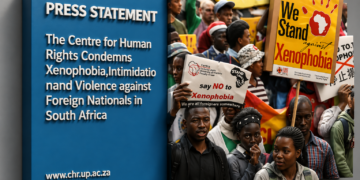















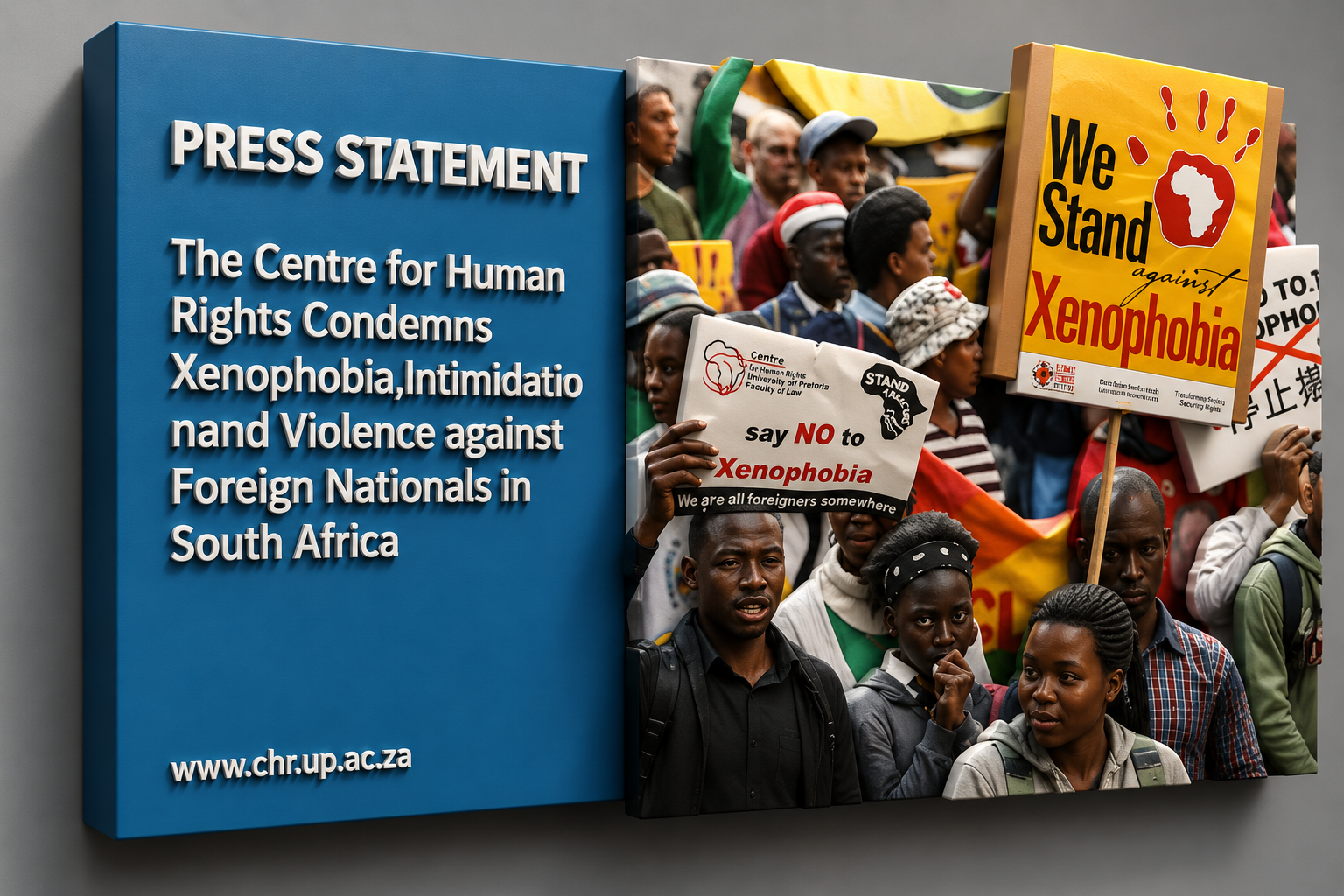
In a statement issued on Monday, the Centre expressed grave concern over recent incidents directed at refugees, asylum seekers, migrants, and other non-nationals across the country.
The Centre for Human Rights, Faculty of Law, University of Pretoria has condemned the growing wave of xenophobic violence, intimidation, harassment, and vigilante attacks targeting foreign nationals in South Africa, warning that such actions threaten the country’s constitutional democracy and human rights framework.
In a statement issued on Monday, the Centre expressed grave concern over recent incidents directed at refugees, asylum seekers, migrants, and other non-nationals across the country.
The Centre said it was particularly alarmed by developments in Durban, where scores of foreign nationals, including women and children, were reportedly forced to flee threats, intimidation, and violence in their communities and seek refuge at the Diakonia Council of Churches Centre.
According to the statement, the situation raises serious concerns about the safety, dignity, and protection of vulnerable persons affected by the attacks.
The statement read, “The Centre is particularly alarmed by recent developments in Durban, where scores of foreign nationals, including women and children, have reportedly sought refuge at the Diakonia Centre after fleeing threats, intimidation, and violence in their communities.
“Reports that vulnerable individuals have been forced to seek temporary shelter while fearing for their safety raise serious concerns about their dignity, security, and access to effective state protection. No person should be forced to flee their home or seek refuge out of fear because of their nationality, language, or perceived immigration status.”
The Centre stressed that South Africa’s democracy is built on the principles of human dignity, equality, freedom, and the rule of law, adding that attacks against individuals based on nationality, language, appearance, or immigration status amount to a direct assault on those constitutional values.
It noted that although issues such as unemployment, governance failures, crime, service delivery challenges, and immigration policy remain subjects of public debate, they can never justify violence, vigilantism, mob action, or collective punishment against foreign nationals.
“While concerns around governance, service delivery, unemployment, crime, and immigration policy may form part of public debate, these challenges can never justify violence, vigilantism, collective punishment, or the unlawful targeting of foreign nationals.
“The enforcement of immigration laws remains the responsibility of lawful state institutions acting within the bounds of the Constitution and the law. No individual or group may assume these powers through intimidation, violence, or mob action,” the Centre stated.
The human rights body also expressed deep concern over reports that vigilante formations and other actors have carried out acts of harassment and violence against foreign nationals, warning that such actions place lives at risk and worsen fear, instability, and division in communities already facing severe social and economic hardship.
According to the Centre, the latest incidents form part of a disturbing and longstanding pattern of xenophobic violence in South Africa that has, over the years, resulted in deaths, injuries, displacement, and deep psychological trauma for many affected communities.
“These developments are especially troubling because they form part of a longstanding pattern of xenophobic violence and intimidation in South Africa.
“Over the years, repeated attacks against foreign nationals, refugees, asylum seekers, and migrants have resulted in deaths, injuries, displacement, and deep social trauma. The recurrence of such incidents underscores the urgent need for sustained and effective measures to address xenophobia, protect vulnerable communities, and uphold the rule of law,” the Centre noted.
The Centre reminded the South African government that every person within its territory, regardless of nationality or immigration status, is entitled to protection under both domestic and international human rights laws.
It cited protections guaranteed under the Constitution of the Republic of South Africa, the African Union African Charter on Human and Peoples’ Rights, and other international human rights instruments binding on South Africa.
The Centre said all persons are entitled to the rights to life, dignity, equality, personal security, and freedom from violence and discrimination.
The organisation subsequently called on South African authorities to take urgent and concrete measures to stop further attacks and protect vulnerable communities.
Among its demands, the Centre urged authorities to immediately prevent further violence, harassment, and intimidation against foreign nationals; carry out prompt, thorough, and impartial investigations into all reported incidents; and ensure accountability for those responsible.
It also called for decisive action against vigilante groups and individuals involved in unlawful enforcement activities, while urging law enforcement agencies to act impartially and in compliance with human rights standards.
The Centre further appealed for immediate humanitarian assistance and protection for displaced persons currently taking shelter in Durban and called for stronger public education and community-based programmes to combat xenophobia, hate-based violence, and misinformation.
In addition, the organisation appealed to political leaders, civil society organisations, faith leaders, community groups, and the general public to reject xenophobia and uphold the values of solidarity, peaceful coexistence, and human dignity.
“Violence and intimidation against foreign nationals do not solve social challenges; they undermine the rule of law and threaten the rights and safety of all who live in South Africa.
“South Africa must respond to social tensions not with fear, scapegoating, or violence, but with justice, accountability, and a renewed commitment to human dignity for all.”
Source: Sahara Repoters